 Free tool
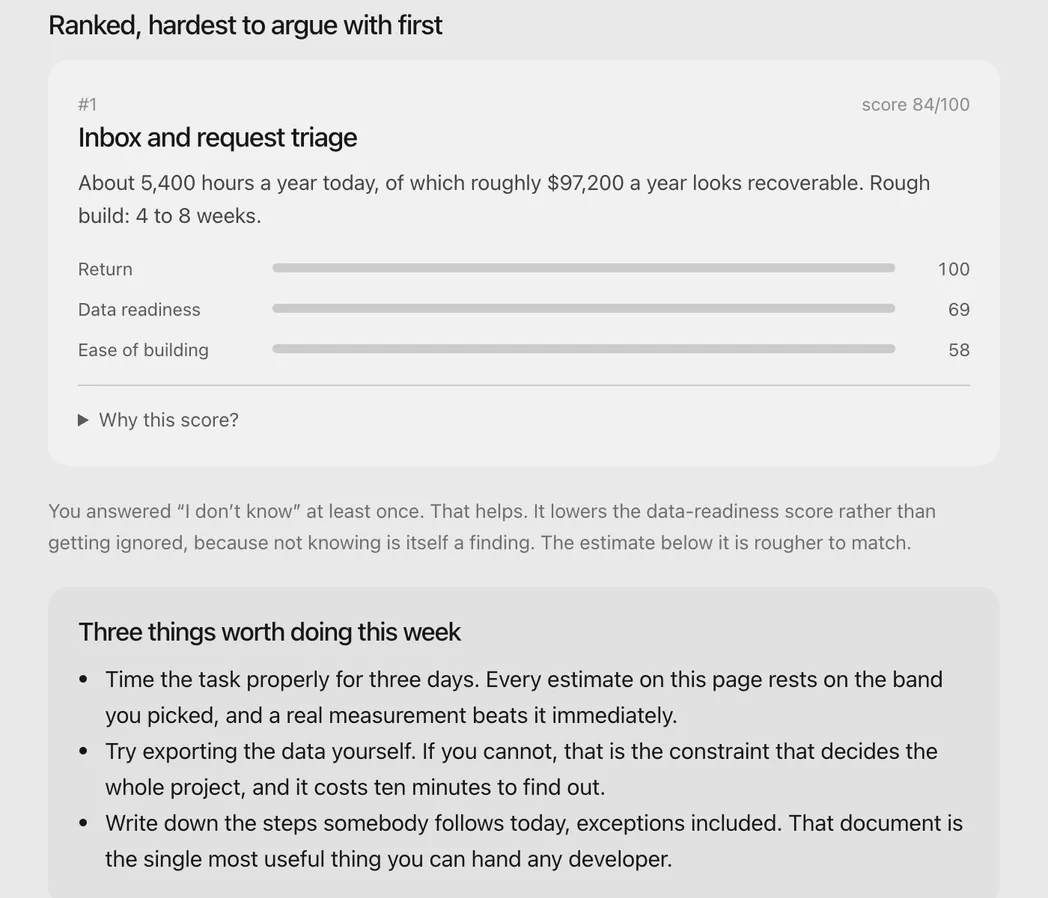
AI Opportunity Scanner
Fifteen questions, one ranked map.

From the first question about where AI fits to a system running in production.
AI Strategy
I find where AI helps you and where it wastes your money.
LLM Systems
Retrieval, prompting and tool use in one working system.
AI Agents
Agents that take real actions inside guardrails you set.
Evaluation
Test sets and metrics that show if the system improves.
Full-Stack
Web and mobile apps, APIs and the plumbing underneath.
Automation
I remove the manual steps that eat your team’s week.
Four self-serve tools. No email required. Each takes a few minutes.
Free toolAI Opportunity Scanner
Fifteen questions, one ranked map.
 Free tool
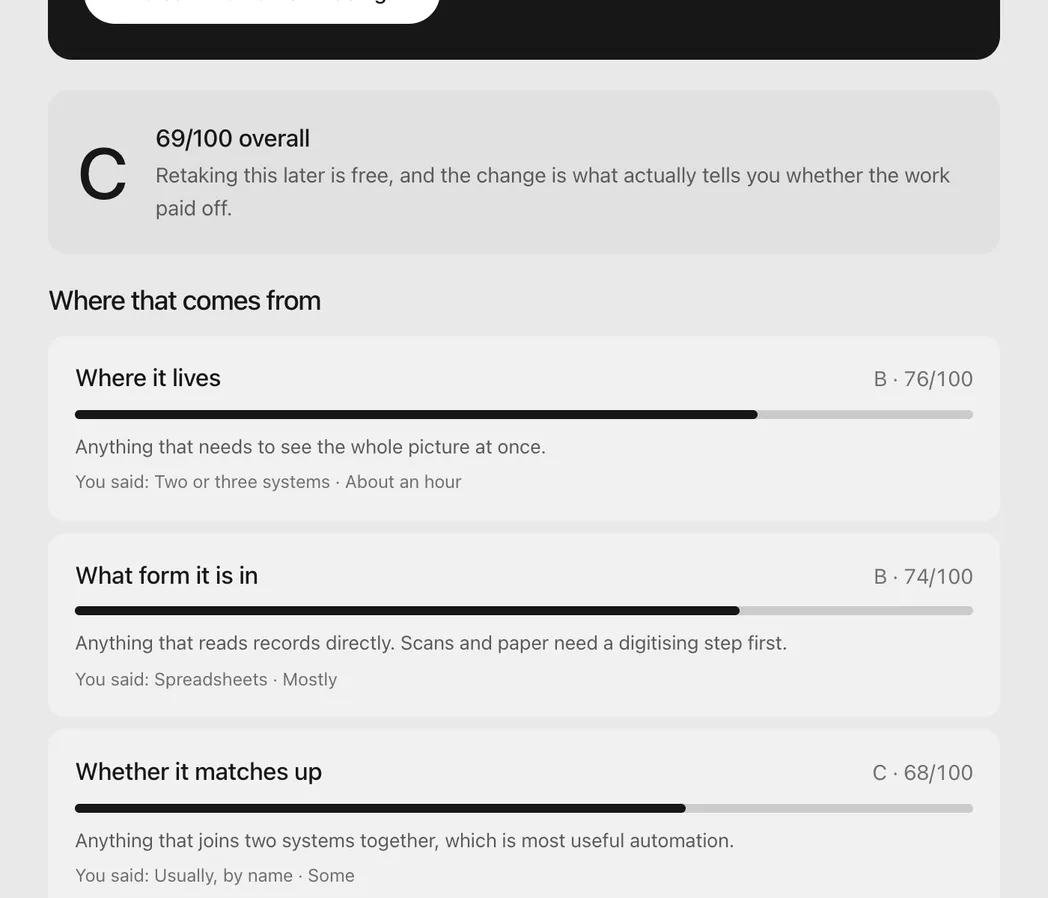
Data Readiness Assessment
Thirteen questions, one letter grade.
 Free tool
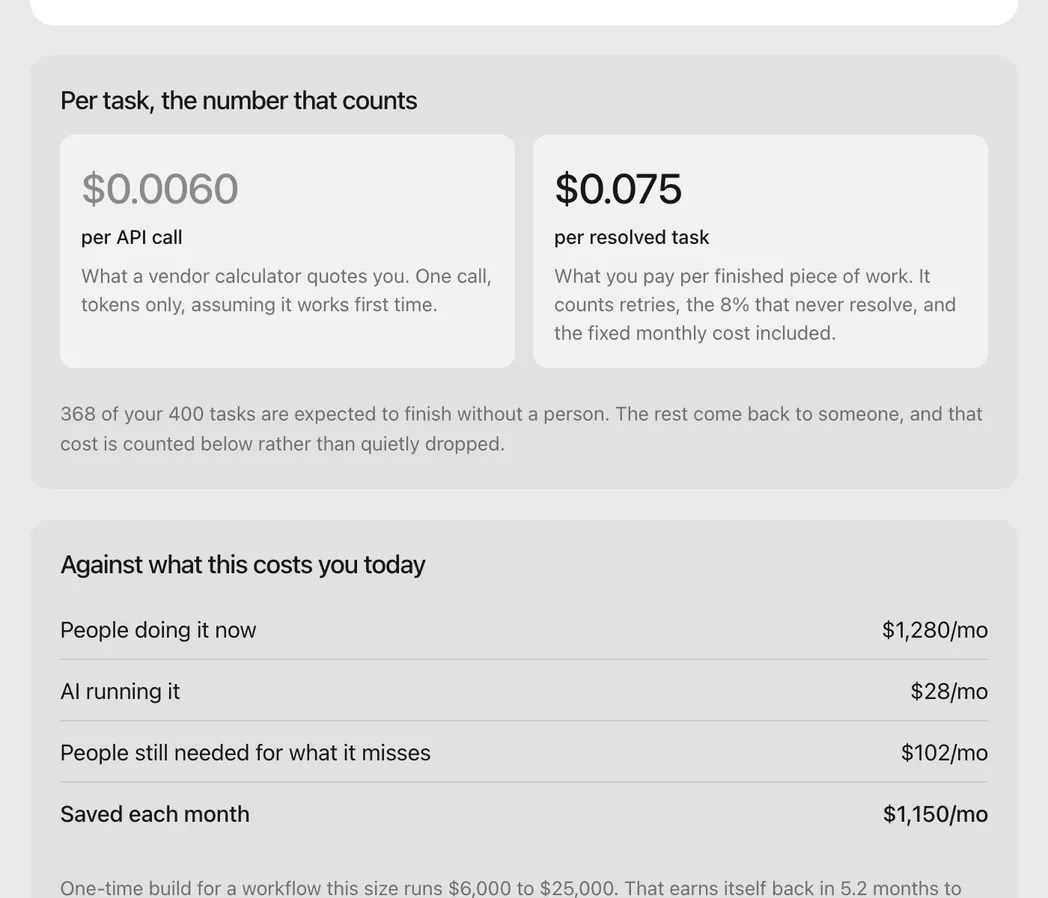
AI Cost Calculator
Cost per resolved task, and payback.
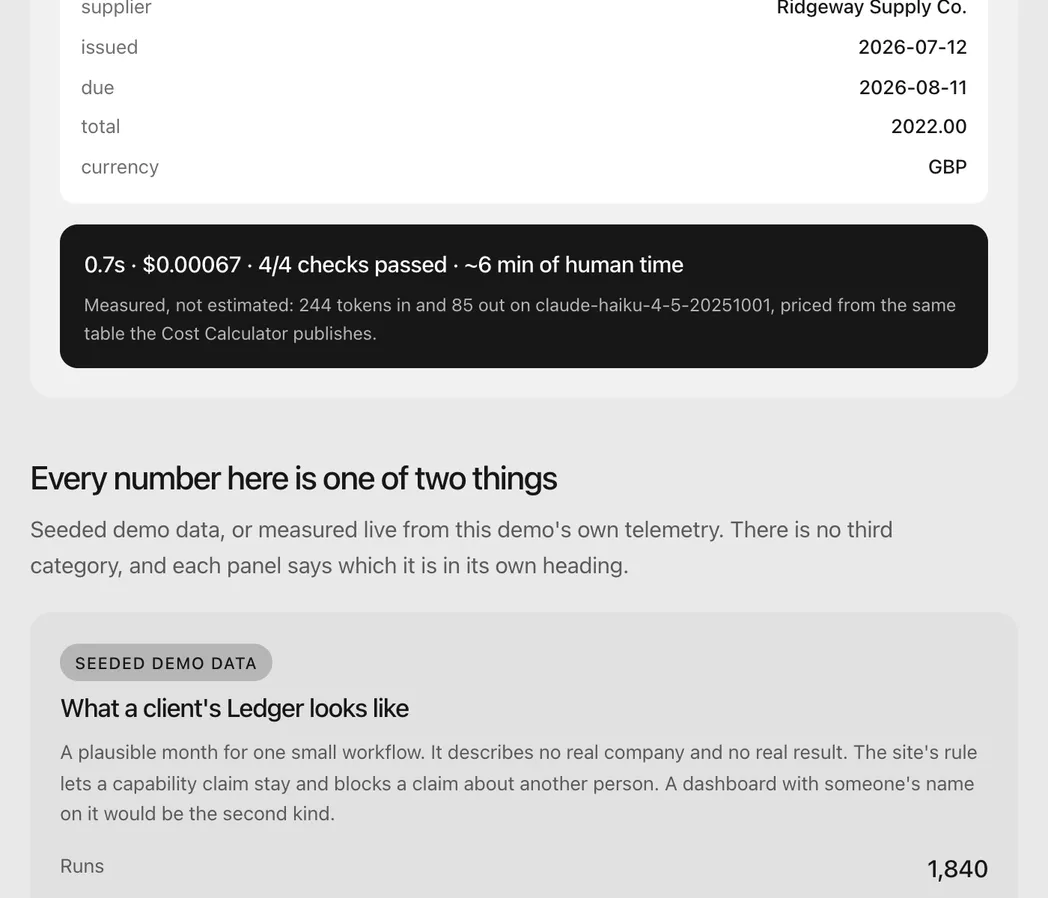 Live demo
Proof
Watch a real run. Read the receipt.
A clear path to building AI systems that survive real use.
Discover
I learn your goals, your users and your limits.
Design
I shape the system and how it behaves.
Build
I write it and wire it and make it real.
Evaluate
I measure whether the thing works yet.
Ship
I release it and watch how it behaves.

Most AI projects fail on the parts nobody demos. The data. The evaluation. Knowing when to stop.
Caden Holland
Quick answers about the process and working together.
Six areas of work: AI strategy, LLM systems, AI agents, evaluation, full-stack engineering and automation. Those are listed further up this page. How you start is a separate question with its own list. The Services page sets out six ways to begin, smallest first: a free scan, Roadmap Lite, a Second Opinion, the AI Opportunity Map, the Build, then the Monthly Proof. One list is the work. The other is how much of it you take on at a time.
Run the free opportunity scanFixed prices, always. A milestone gets invoiced once it passes written criteria you approved before the build started. Prices step up when the waitlist runs long and they stay there. I publish that rule instead of negotiating it. The Pricing page explains all of it.
Teams who know AI belongs somewhere in their product and want help finding where. Teams who need an existing system made reliable.
One stack for all of it: TypeScript, SQL, Postgres, React, React Native, Cloudflare, Supabase and Claude Code. Python joins when AI or ML work needs its libraries. If your problem fits a different stack better I say so.
Your code sits in your own GitHub organisation from day one. It runs on a boring stack thousands of developers maintain. The runbook lets a competent engineer pick it up cold. Ninety days of support are included. Monitoring after that is your call. Cancel it with one email and take your data with you.
That happens often enough to have its own starting point. A Second Opinion is a fixed-price review of what got built. It covers why the system falls short and whether it is worth saving. I run an evaluation harness against it so the answer carries numbers. Sometimes the answer is that your vendor did fine and your data was the problem.
It depends on the scope. Anyone quoting a number before discovery is guessing. You get a written estimate after the first conversation. When the shape is still fuzzy we start with a smaller first piece of work.
Yes. I work remotely across time zones. We set a regular meeting slot that suits your working hours.
Send a short description of the problem through the contact form. If it fits, the next step is a call to scope it. If it fits someone else better I say so and point you there.
Open for projects
Tell me what runs slow or costs too much or keeps breaking. If AI is the wrong answer I say so.